Place
Where do you do your clearest thinking: close to the work, across functions, with a small group, or in a wider system?


Monday, any season · for the work you are living now
It is weather to notice: the pressure around you, the energy available, and the horizon you want to move toward.
Today’s bulletin
Pause long enough to separate a passing storm from a lasting signal.
Choose the closest reading. This is not a diagnosis—just a useful first look through the glass.
When the view is hazy, do not force a five-year answer. Gather smaller evidence: the moments you became absorbed, the tasks that consistently drain you, and the people whose work you want to understand better.
For seven days, write one sentence each evening: “I had more air when…”
A move can be wise, overdue, or simply a reaction to one hard week. This loose field check keeps a little distance between the feeling and the decision.

What has been asking for your attention more than once?
Is the friction in the craft, the team, the pace, or the story you have been telling yourself?
What kind of exploration is possible without asking you to become a different person overnight?
Make the next test small enough to learn from, and specific enough to remember.
Look past the title line. Each column is a different part of the view worth bringing into a conversation about what comes next.
Where do you do your clearest thinking: close to the work, across functions, with a small group, or in a wider system?
What rhythm lets you be careful without becoming stuck?

Whose questions make your thinking wider or more exact?

Which skill would you like to keep using even when the day is demanding?

A pause is not empty time. It can be a place to notice the pattern between what you value, what others ask of you, and what your days actually contain.
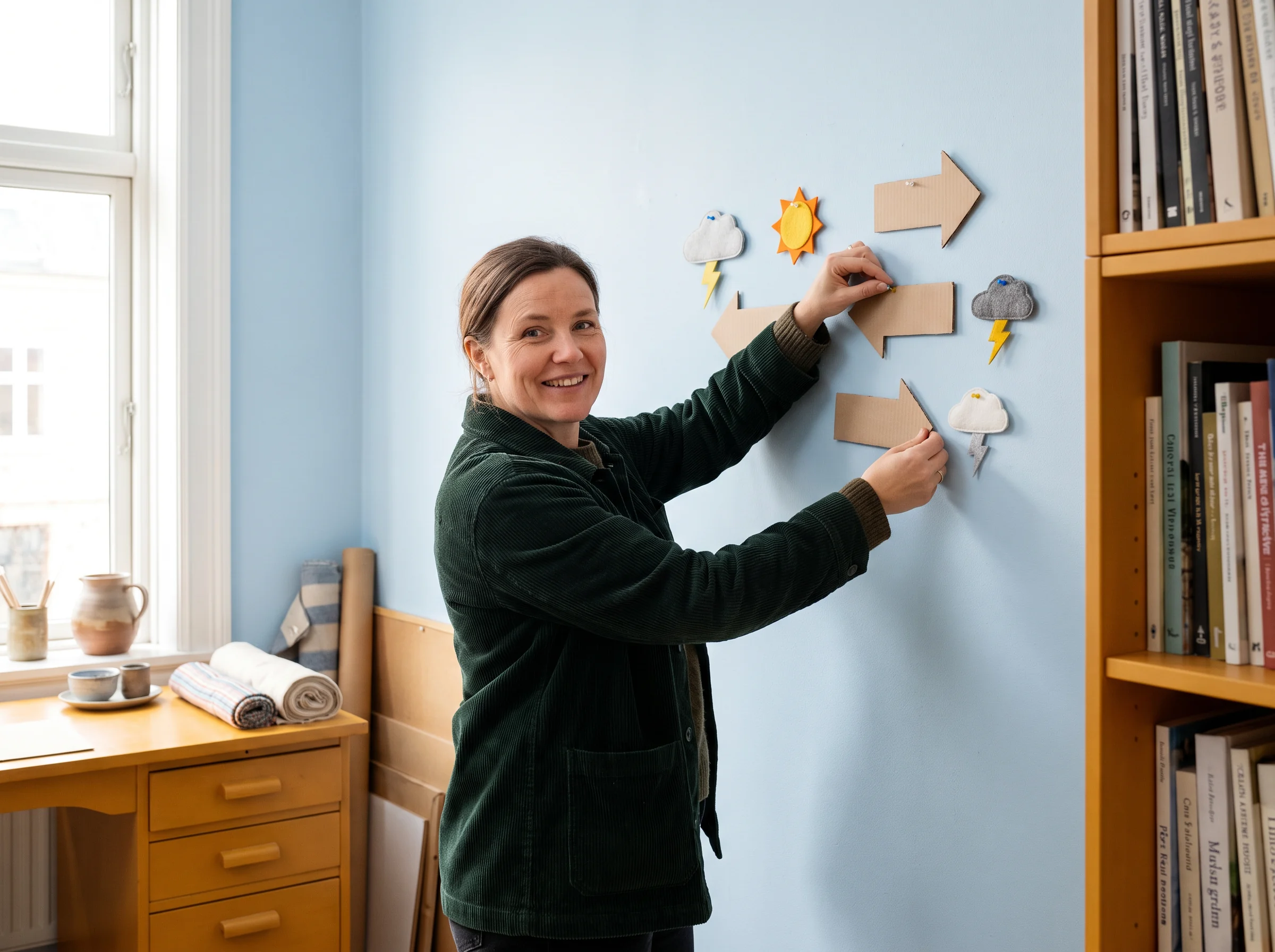

Tap a weather ring to make room for one practical question. You do not have to remove the pressure before you understand its shape.
List the people, systems, or imagined audiences involved. Then mark which expectation has been stated aloud, and which one you have been carrying alone.
Not a promise about what will happen. A record of what you will look for next.
Ask a trusted person what they notice you doing when you are most engaged—not what role they think you should take.
Read a project, role, or organisation closely enough to replace a vague attraction with three clear questions.
Write down what changed after the conversation or exploration. Conditions are easier to read when you have a few past observations.
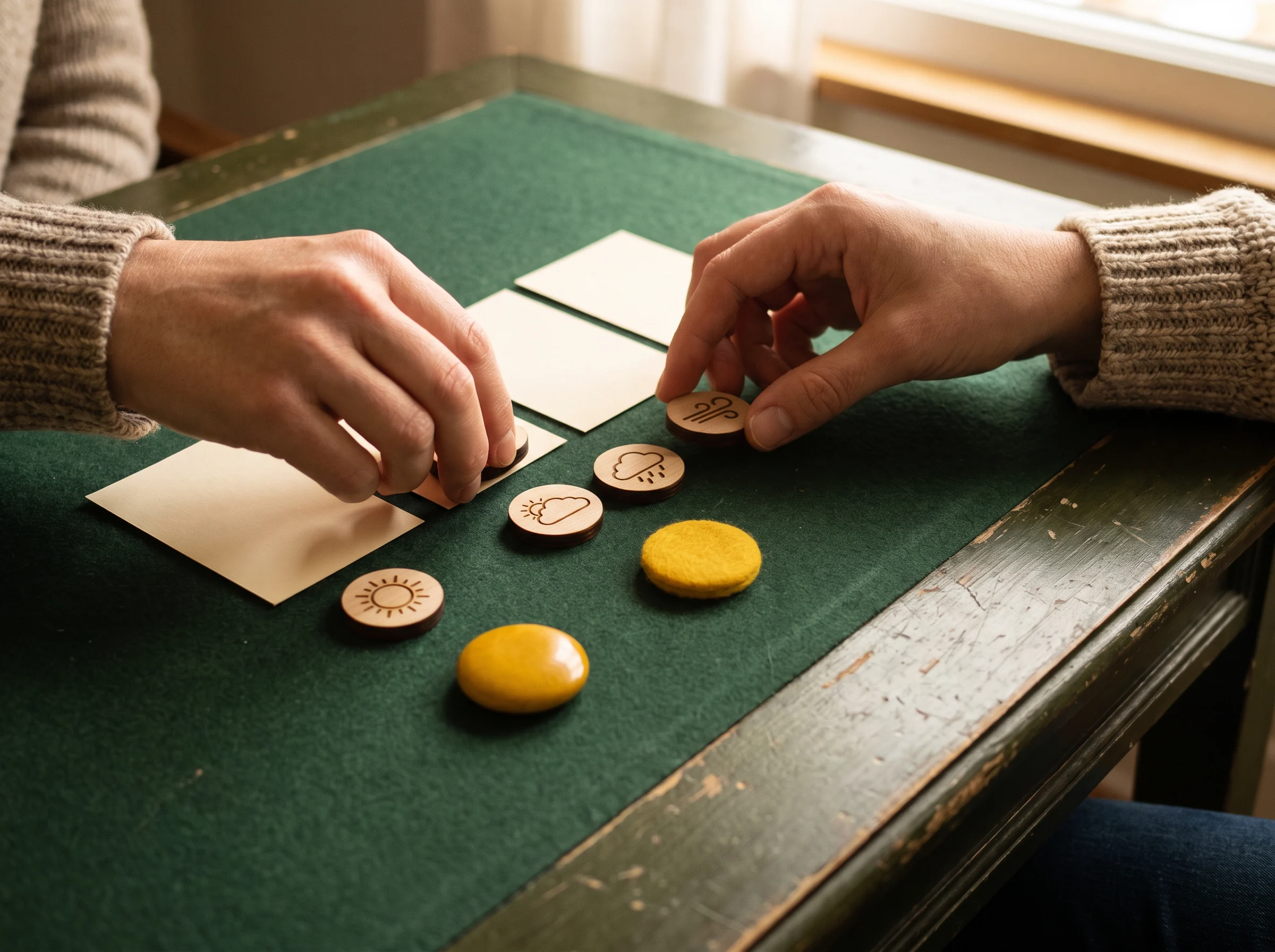 Pack the question, not a performance.
A useful professional conversation can begin without a grand announcement. Bring one pattern you have noticed, one point of curiosity, and one request that makes room for a response.
 OPEN / UNBRANDED
There is no program to buy through this shelf. These are simple formats you can make your own.
Tell us the condition you are trying to read. The form stays in your browser and will simply confirm once your note is prepared.
[email protected]